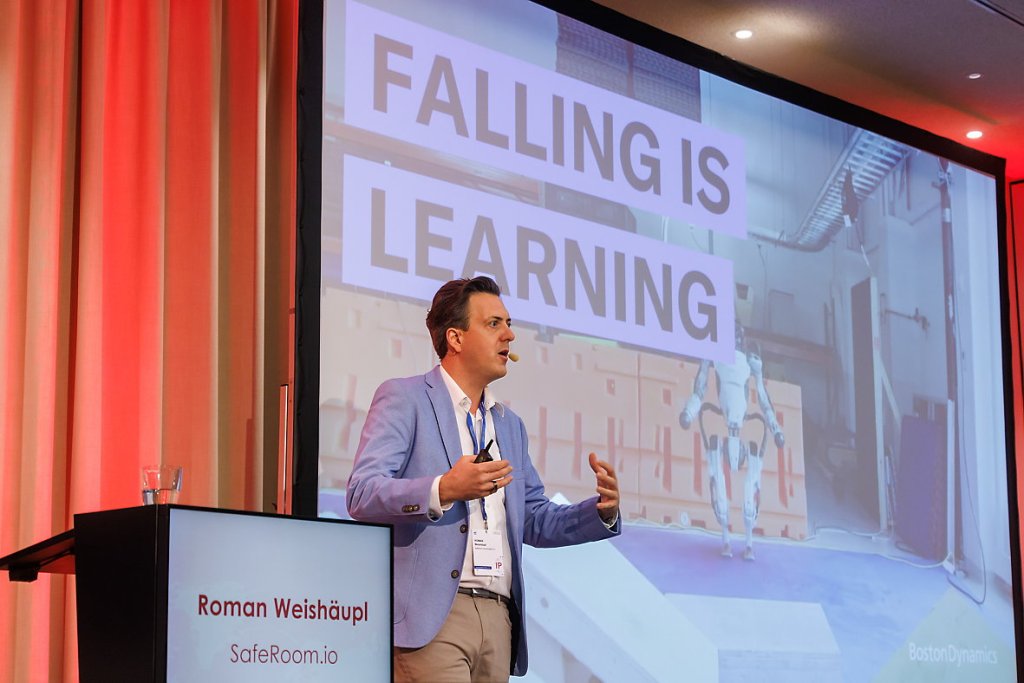
My answer to this question is simply: No! I believe failure is never an option.
It’s common for people to view failure as a necessary part of success, and to talk about the importance of a “failing culture”. However, this perspective can be problematic because it suggests that failure is inevitable or even desirable. In reality, failure is not an inherent part of the human experience. When we experience a setback or fall, it’s important to remember that we are not failures as individuals – we just need to get back up and try again.
In my keynotes I like to reframe this perspective to think about the process of learning to walk. When babies are learning to walk, they fall all the time. We encourage them to get back up and try again, and we offer them support and encouragement throughout the process. We recognize that falling is a natural and necessary part of the learning process, and we never doubt that the baby will eventually learn to walk.
As adults, we can adopt a similar attitude towards falling and setbacks. Rather than viewing failure as a definitive outcome, we can see it as a natural and necessary part of the learning process. We can embrace the idea of falling and getting back up again, and we can support and encourage one another to do the same. This approach is essential for fostering innovation and progress, because it allows us to take risks and learn from our mistakes without being held back by fear of failure. As the famous d.school at Stanford sign says, “Nothing is a mistake. There is no win and no fail, there is only make!“

Successful entrepreneurs never fail but thy often fall or experience major setbacks at some point in their careers, but it’s how they react to and learn from that fall that truly matters. These six entrepreneurs offer inspiring examples of why falling should never stop you from following your vision.
- Arianna Huffington was rejected by 36 publishers before her second book was finally accepted. Even the Huffington Post, which she founded later, received negative reviews when it launched. However, Huffington eventually turned the publication into a successful outlet.
- Bill Gates’ first company, Traf-O-Data, was a complete disaster. However, he didn’t let this hold him back and went on to create his first Microsoft product and achieve massive success.
- George Steinbrenner’s small basketball team, the Cleveland Pipers, went bankrupt under his ownership. He later acquired the New York Yankees, which experienced setbacks and losses in the 1980s and 1990s. Despite criticism of his decisions, Steinbrenner eventually led the team to six World Series entries between 1996 and 2003 and made it one of the most profitable teams in Major League Baseball.
- Walt Disney was once told he lacked creativity and was fired from a newspaper. His first animation company, Laugh-O-Gram Films, also failed. However, he eventually found success in Hollywood after facing criticism and failure.
- Steve Jobs was fired from his own company, Apple, at the age of 30. He went on to found another company, NeXT, which was later acquired by Apple. He then played a key role in revitalizing the company and taking it to new heights.
- Milton Hershey experienced failure with three candy-related ventures before eventually creating the successful Hershey’s chocolate company.
These entrepreneurs demonstrate that those are simply temporary setbacks on their path to success. By learning from their mistakes and continuing to pursue their visions, they were able to achieve their goals and become successful.
What do you think? What is your take on falling or failure? How do you support falling in your organization?

Inspired by: https://www.entrepreneur.com/leadership/6-stories-of-super-successes-who-overcame-failure/240492
 eXecute Entrepreneur
Leave a comment